Sunny Days Classroom Kit

Brighten up any classroom with our printable kits

Lotsa Dots Classroom Kit

Colorful Printable kits help to cheer up any classroom

Sunny Days Classroom Kit

Organizational printables help keep your classroom functional and easy to manage

Back to School is a HOOT!

Colorful owls help bring an organized theme to your classroom

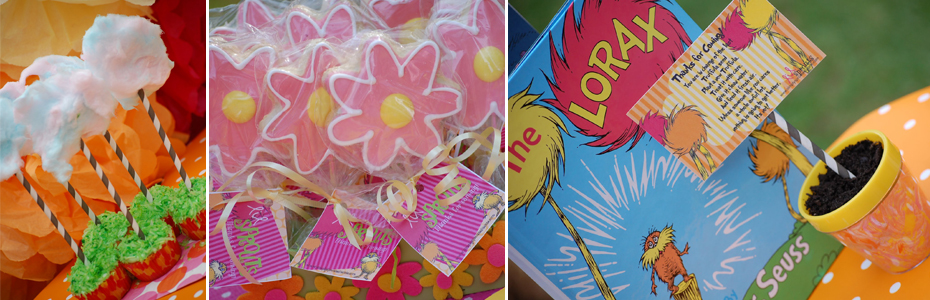
Lil Sprouts Educational Outreach: Lorax Party

Simply Sprout offers educational outreach to preschoolers using our classroom printable kits

Showing posts with label backyard science. Show all posts

Monday, July 9, 2012

It's an Ice Age Dino Dig

My daughter is the perfect age right now for going to the movies. She loves the experience of going to the theaters and getting her snack and watching a  movie on the big screen. But amidst the popcorn and Reeses Pieces come the endless questions....Mommy why does that elephant have hair? Mommy why does that squirrel have teeth? Mommy why is there so much ice?  The questions go on and on for what feels like an Ice Age.  So this time as the 4th movie is about to be released, I want to be prepared. I decided to do a little prehistorical play before we go and see the movie when it debuts this weekend.

The Ice Age series is one of my favorites. There is a lot of humor and  a lot of scientific references, the teacher in me loves that. I love when concepts are introduced to kids that encourage them to investigate a little further. Ice age is the perfect movie to introduce animals from the past, as well as the concept of Pangea, continents and the concept of changing over time. These concepts are very hard for a preschooler to comprehend without a little introduction. 

So in preparation for our trip to the movies we started off by talking a little bit about dinosaurs. We read a few books and talked about the pictures we saw. We talked about why scientist think dinosaurs are no longer around, and we talked about the proof that exist (dinosaur bones) that lets us know that they were here roaming the Earth where we now have cities and towns.The concept of things changing over time is very hard for young children to understand. It is hard for them to understand the aging process and how things have evolved over time whether it be cities or animals. So helping them using books or pictures helps them to establish some framework for understanding.


After reading our books I decided to set up our own archaeologist dig. I buried some shells and some dinosaur bones in the sand and gave my daughter a small paintbrush. She carefully used it to brush away the sand to eventually reveal the dinosaur.


Once the Dinosaur was unearthed we talked about what dinosaurs must have looked like and how they resemble some animals that still live today.


I then started talking with her about fossils and how fossils are made. We talked about how scientist use fossils to help them understand animals that are no longer living. Like the ones featured in Ice Age.

Fossils is a great book that helps to illustrate how fossils are obtained and preserved in our Earth for so many years. It also takes a closer look at the scientists that study fossils.
Join us later this week as we make our own fossils and do a little Ice Age discovery of our own.


Before you hit the theaters this weekend do a little prehistoric play with your preschoolers so they will understand the movie a little better. Use it as a teaching tool for making some great science connections and get those little minds thinking!

Posted by Picasa

Thursday, June 7, 2012

Those Itsy Bitsy Spiders


Summer is a great time to allow your budding scientists to see the world around them in a whole new light. Marcy shared some fabulous ideas last week on how to take your drab backyard and make it blissful, and adding science to play is just another way! I hesitate to call spiders blissful, but giving children time in the great outdoors most certainly is. Relishing in all that nature has to offer includes appreciating the role of living and non-living things in the ecosystems around us.

By doing a quick nature walk around the house yard your children should be able to spot a spider web or two. Have them make observations with their eyes only. It's important to teach children about different types of habitats, and with that knowledge they will learn to respect the craftsmanship and purpose of each animal's home. Point out the different shapes and sizes that webs come in. If your children are old enough to do a little research that would be great. Have them try to find pictures of spider webs, what webs are made of, where the silk comes from, what type of animal is a spider, and the names of different types of webs and spiders. For younger children you might want to read a book like Eric Carle's Very Busy Spider. Make breakfast spider themed too, and practice having little ones count to eight (the number of legs a spider has) while dining on spider pancakes.

Now have your children use their art skills to recreate their observations. Here's what they'll need:

*black (or dark) construction paper
*bottle of glue
*white or clear glitter (optional)


Using the tip of the glue as a pen have children create a web. We created an orb web, the kind Charlotte is famous for, and a sheet web. To take it a step farther children could design a spider to attach to their web and attach note cards with interesting arachnid facts. Of course if you are looking for a tie into literature make E.B. White's Charlotte's Web a summer family book club choice! For older children (elementary age) print out a copy of A Spiders Web, a science journal, from my Teachers Pay Teachers site. This observation sheet will allow them to record their thoughts and will compliment the spider art project wonderfully.

Those Itsy Bitsy Spiders can provide lots of summer science fun!